Writer StudioProject
Clinical trial foundation platform
My role
Lead UX Designer and Researcher
Location & year
United States - 2026

Digitize fragmented pharma clinical trial workflows into a structured, role-based collaboration ecosystem with real-time visibility, traceability, and cross-functional alignment.
At MORAL, in partnership with Eli Lilly and Company, I led the UX design of an enterprise collaboration workflow designed to replace fragmented Word, email, and manual handoffs with a shared space for internal Lilly teams to create and review trial documentation.

The
Challenge
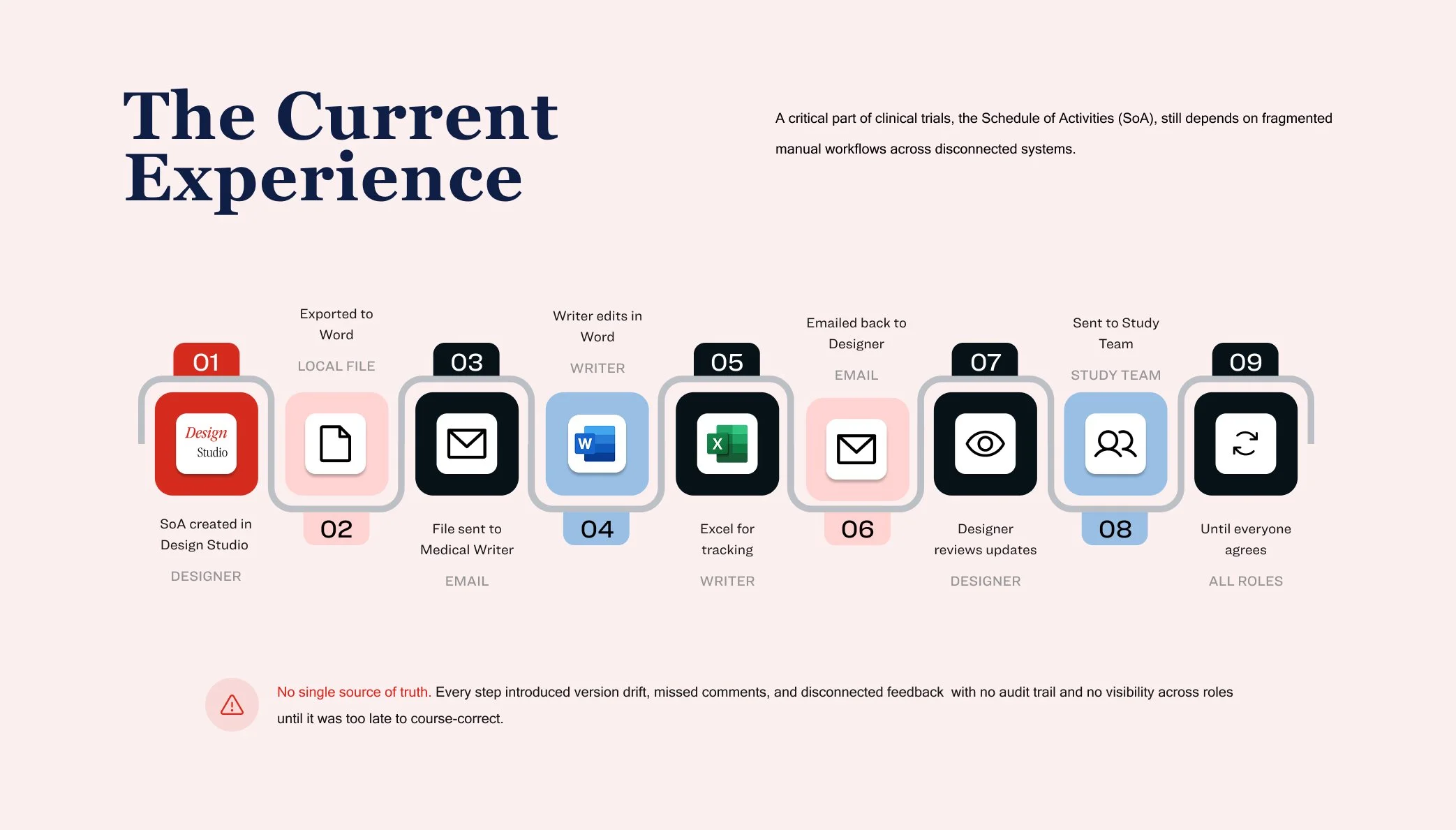
The Schedule of Activities (SoA) defines when key procedures and assessments happen throughout a clinical trial. But creating and reviewing it required several roles to work across a fragmented workflow. Writers edited through a Word-based process, feedback moved through email and other channels, designers reconciled changes separately, and Study Teams often reviewed a different copy of the same document. As the SoA evolved, context, ownership, and review status became increasingly difficult to track.
The real design problem wasn't editing the SoA. It was preserving context, ownership, and alignment as the work moved across roles.
How do we preserve the familiarity of the existing workflow while making ownership, review, and change history explicit?
Exploring
the Solution
Clinical trial workflows relied on close collaboration between Medical Writers, Designers, and Study Teams. Each role had different responsibilities, priorities, and pain points, making it essential to understand how teams communicated, reviewed, and handed off work across the protocol lifecycle.
Research & discovery
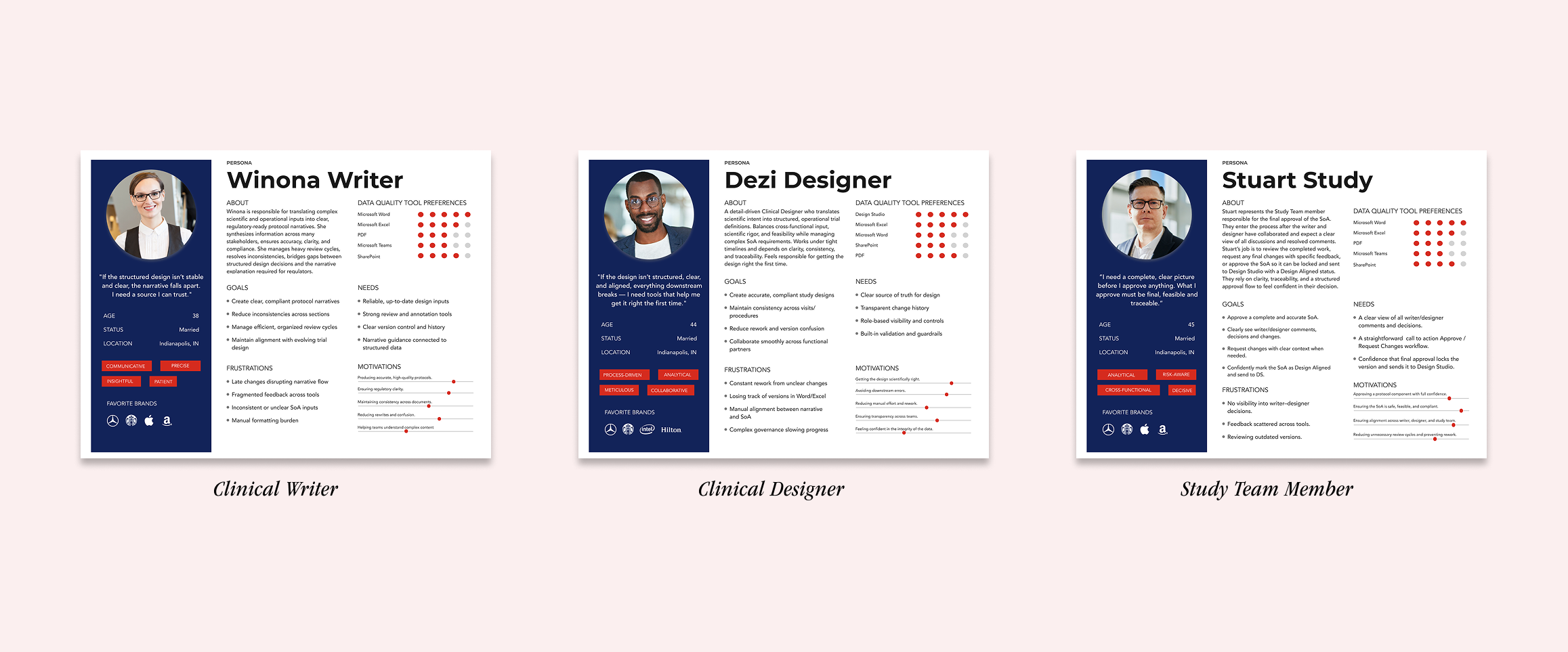
Three roles, three different relationships to the same document
Understanding the breakdown required looking past "collaborator" as a single user type. Clinical Writers, Designers, and Study Teams worked on the same SoA, but each had different responsibilities and authority over it. Treating them as interchangeable was part of what made the existing workflow fragile.
Product direction
Familiarity
vs. Scale
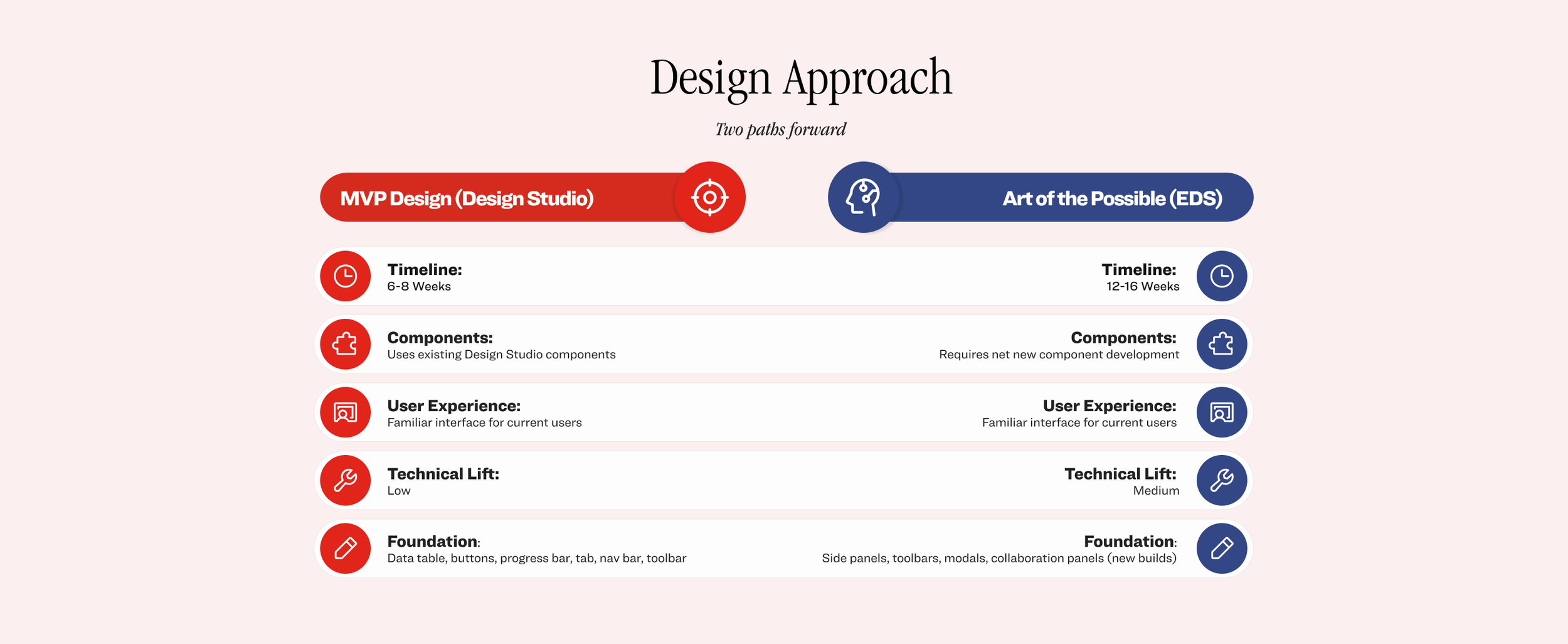
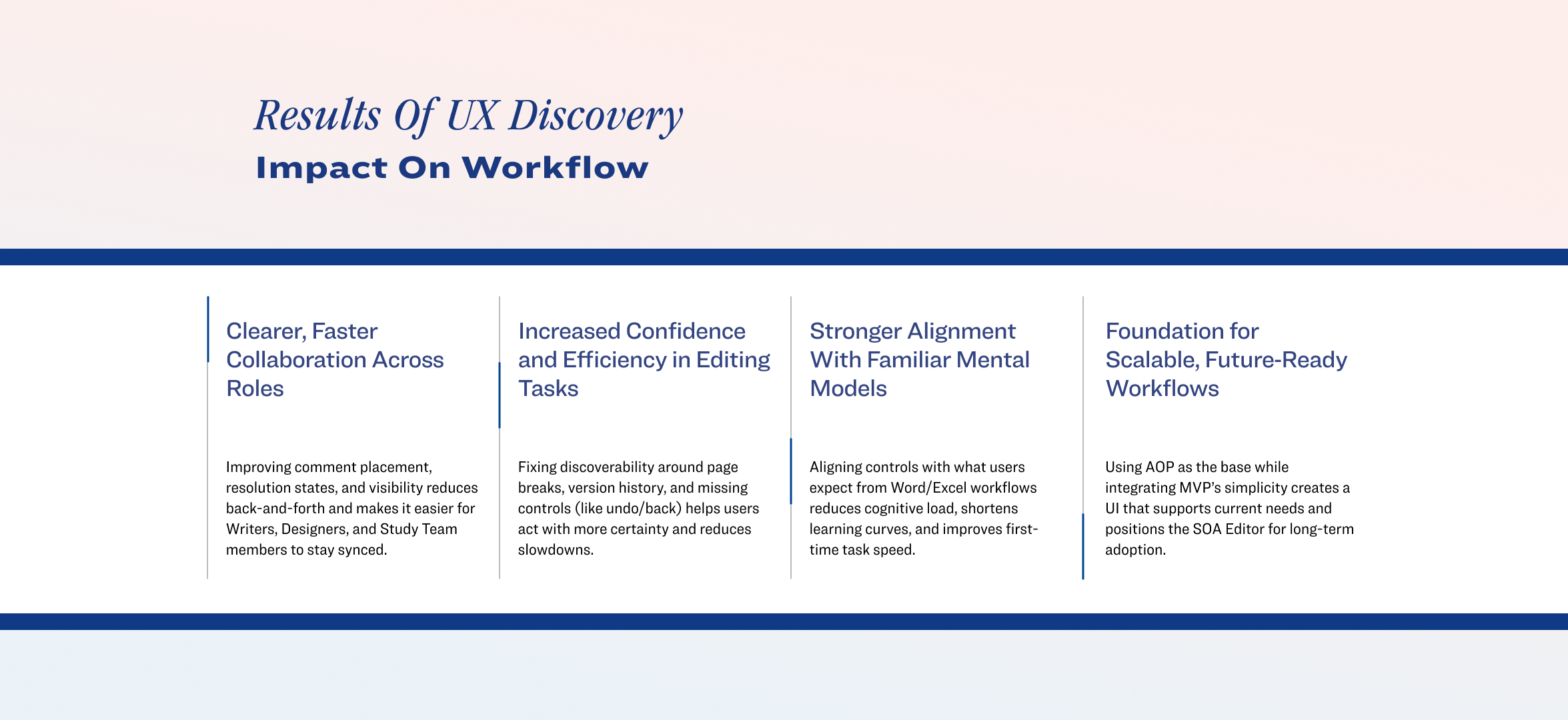
Interviews with the people who'd actually use this, inside Lilly, surfaced something we hadn't planned for. They weren't attached to the current process because it worked, they had real problems with it. But their jobs were high-stakes, and learning a new tool on top of that wasn't something they had room for. That reframed the question from which experience is better to how much change someone in this role could actually absorb without it costing them.
We put both in front of the same people and watched which one they could actually work in, not which one looked more finished. That's what decided it.
Meet,
Writer's Studio™
Digital Trial Foundations
"This isn't about replacing what worked — it's about building what's needed for the future of governed, collaborative medical writing."
Exploring the Two Directions
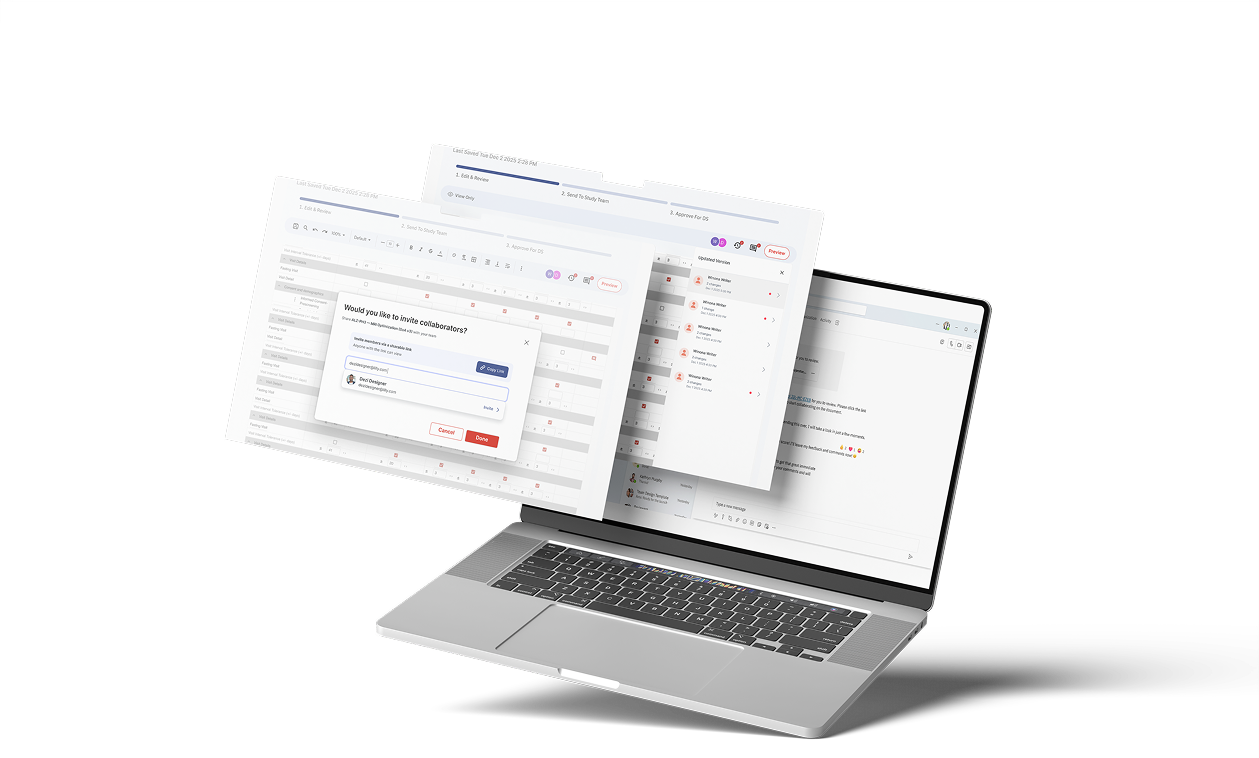
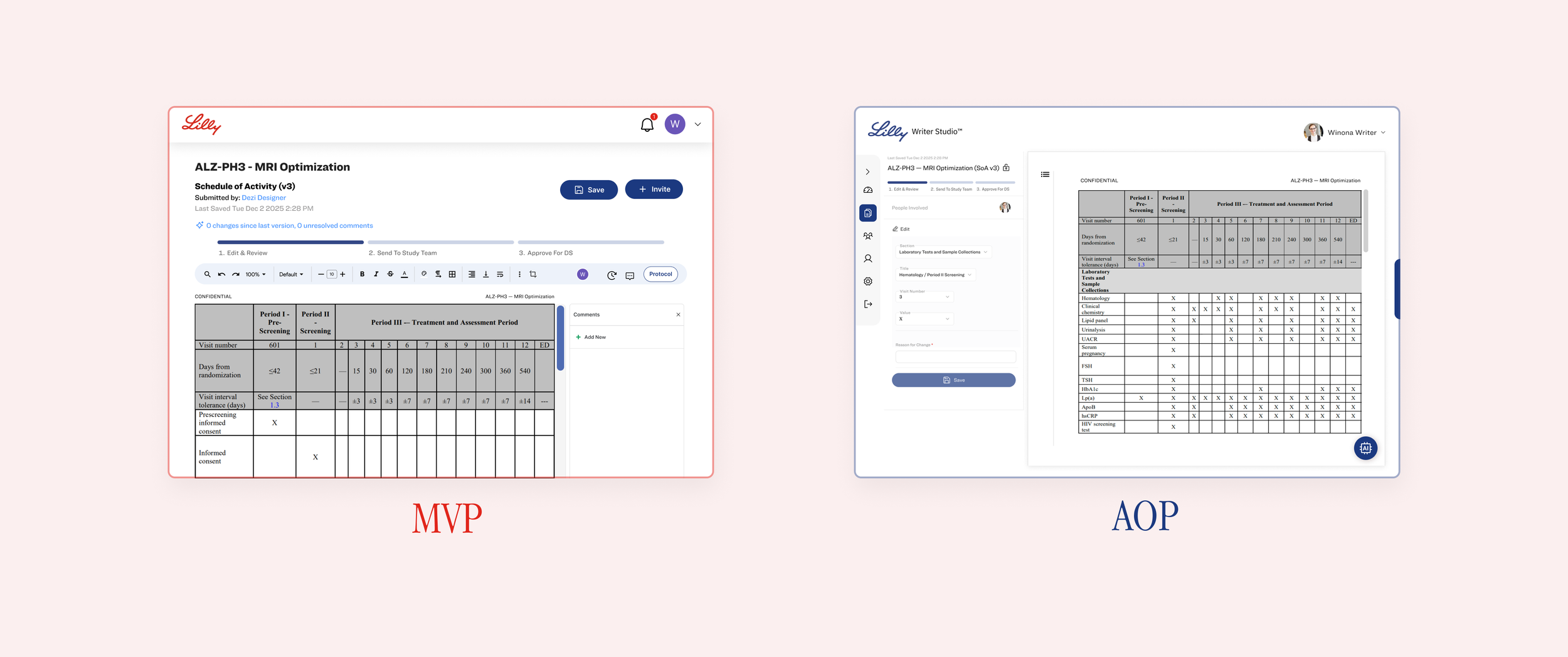
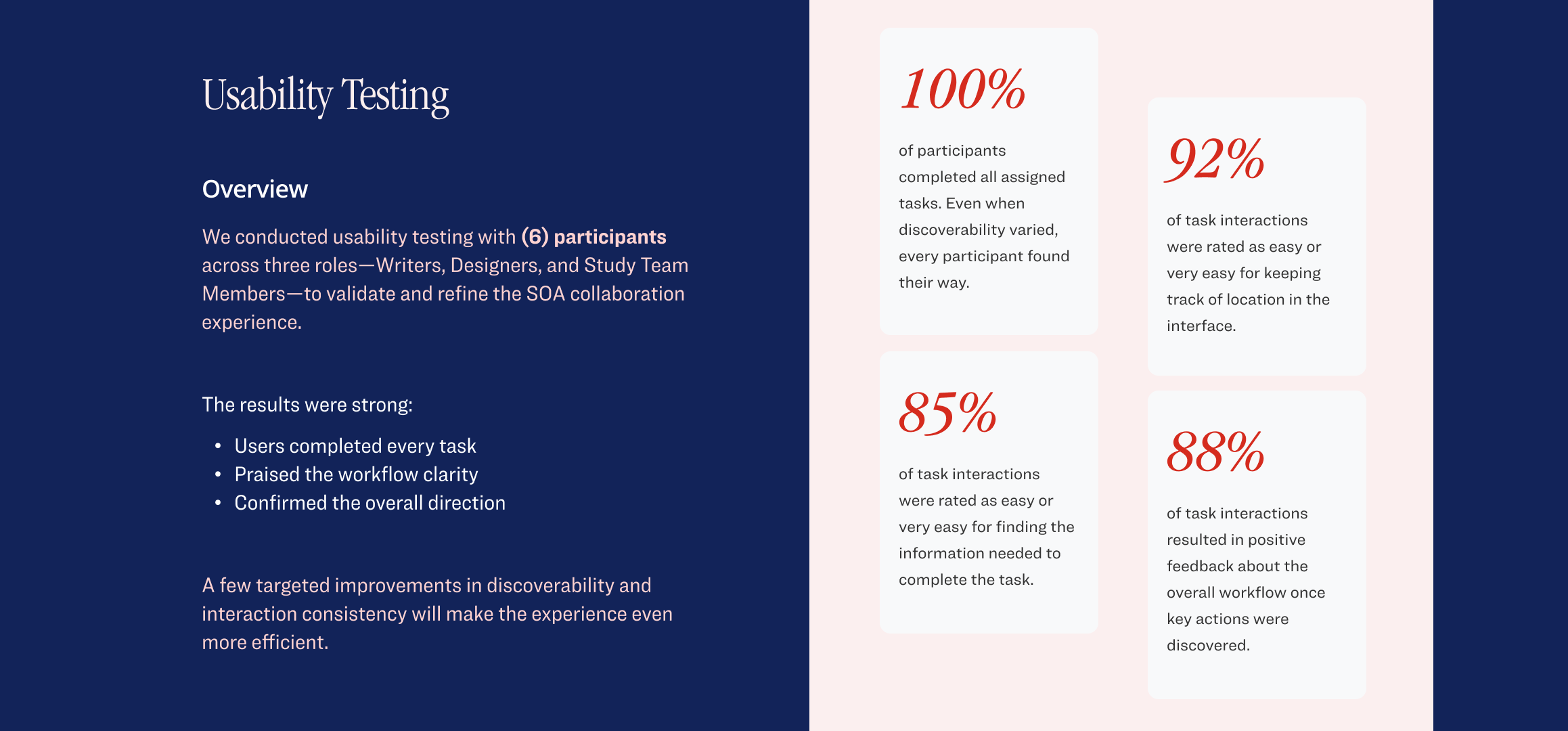
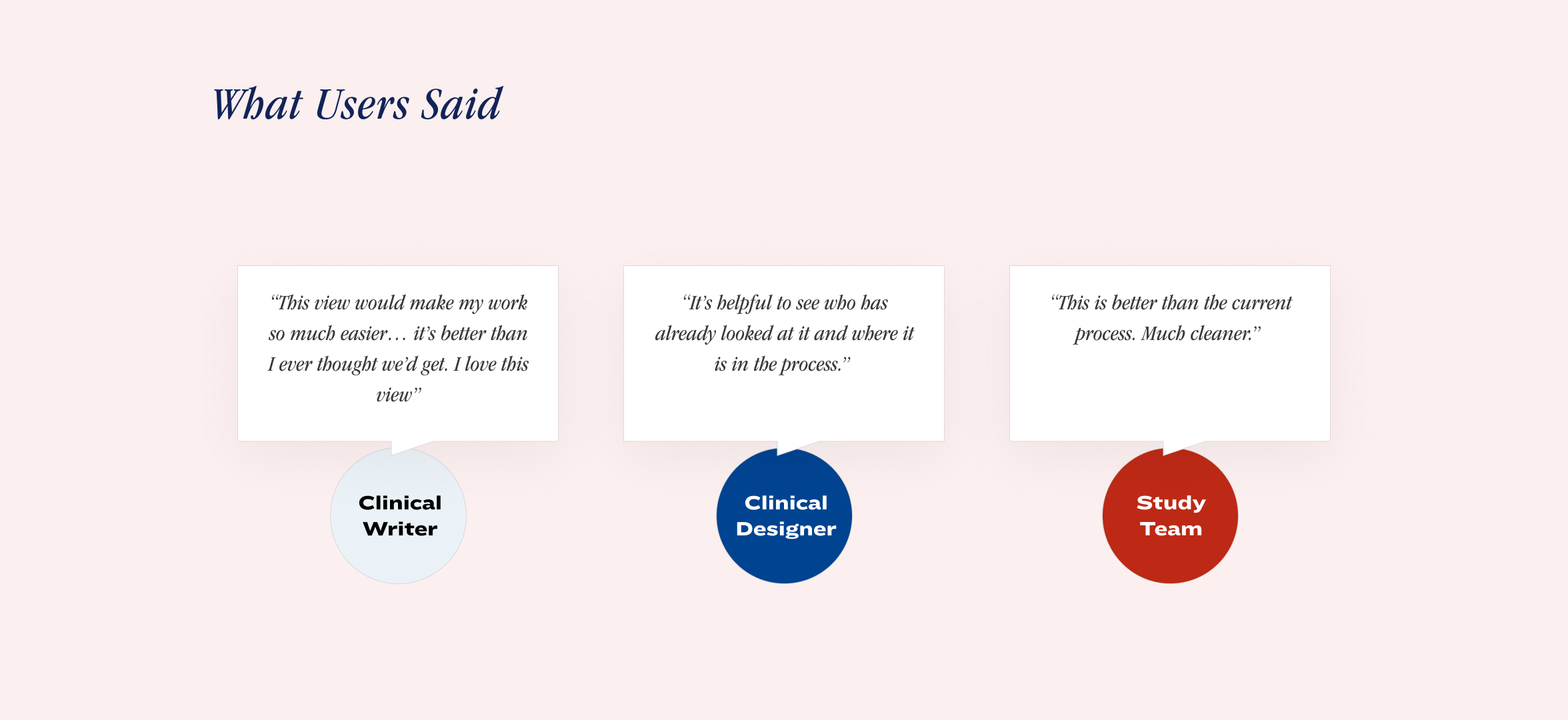
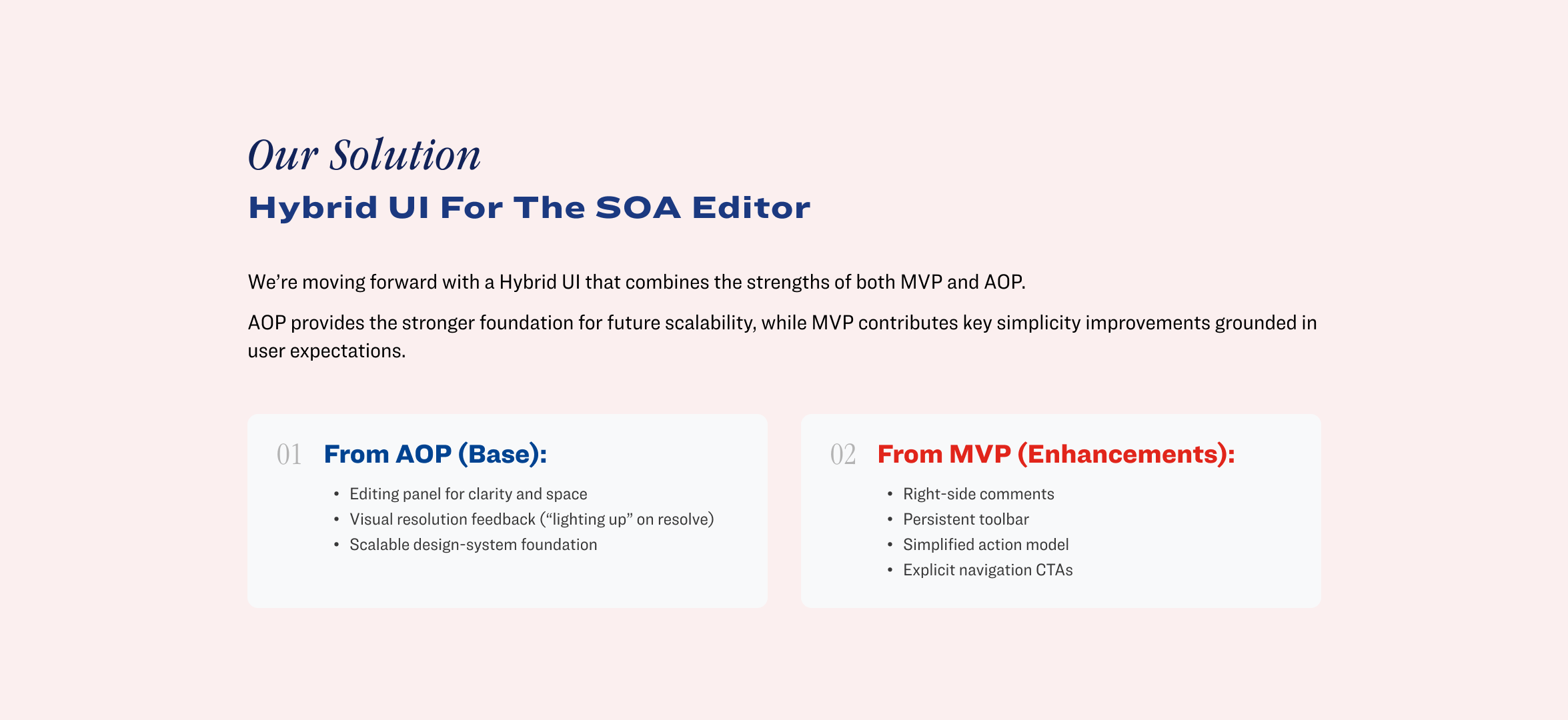
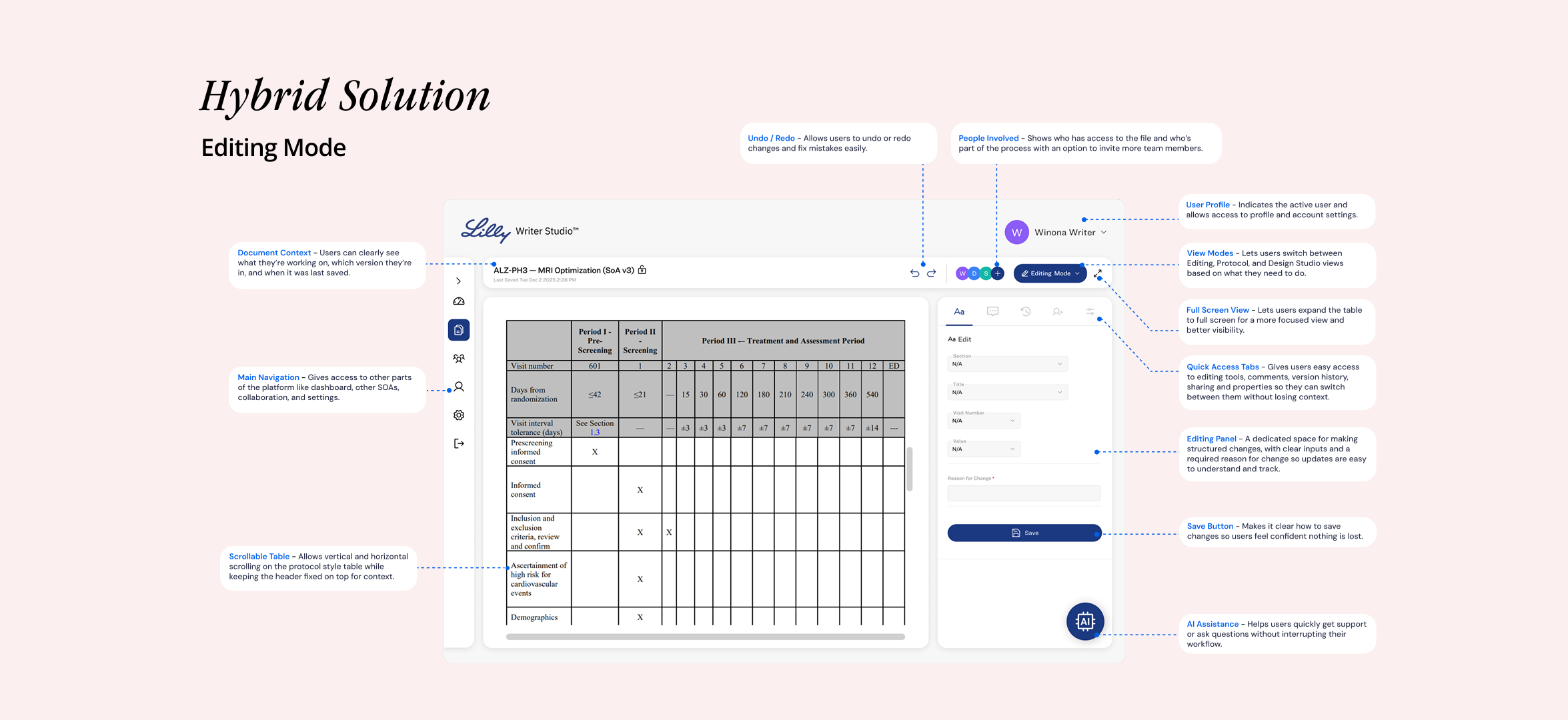
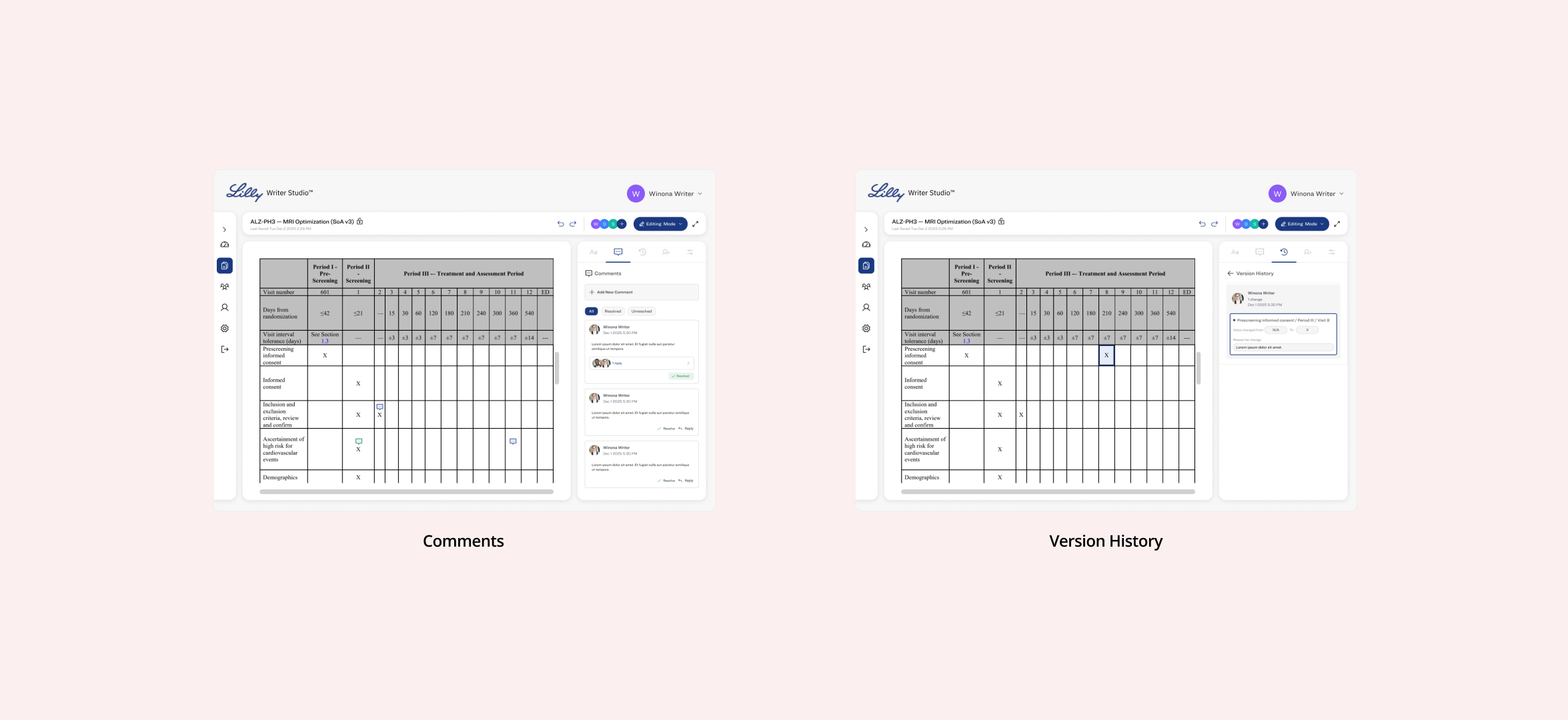
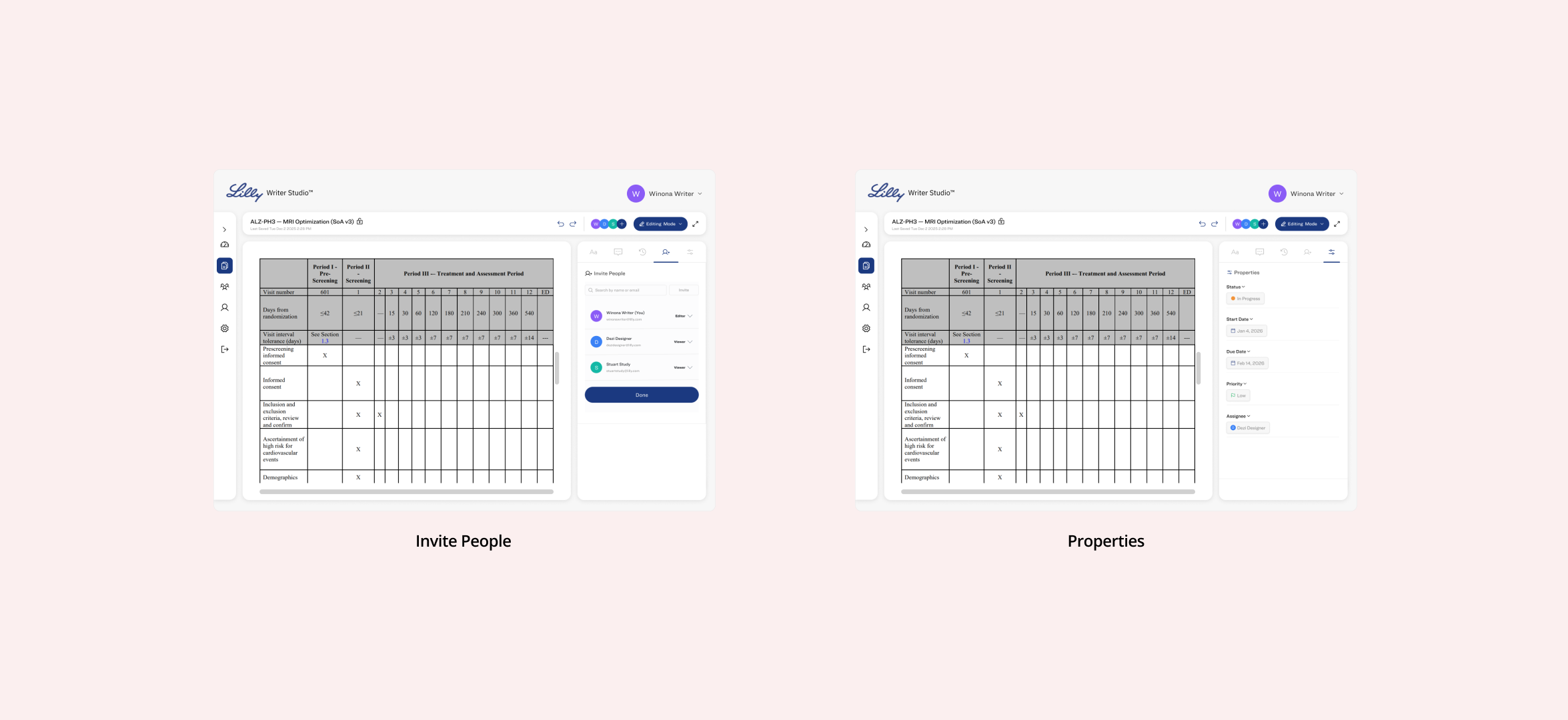
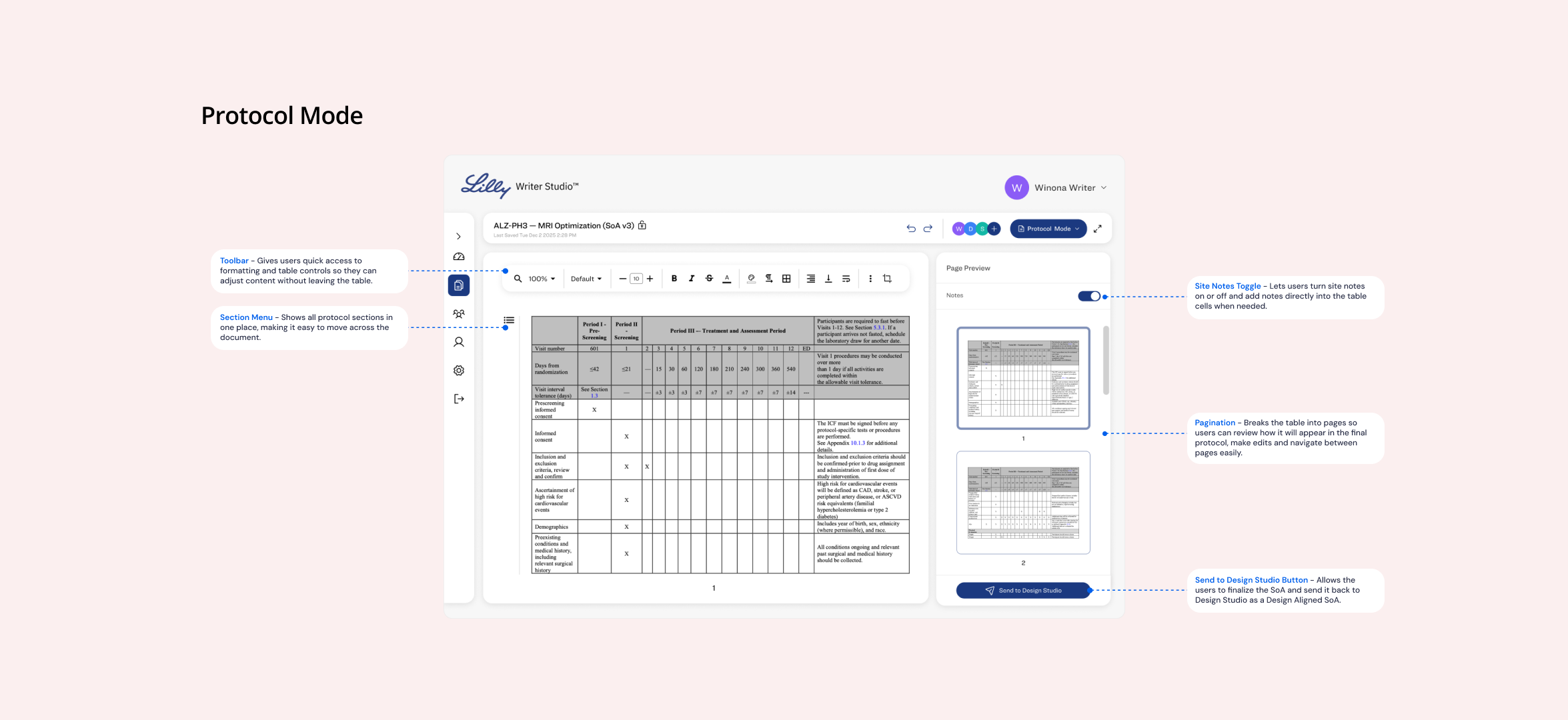
We decided to run an A/B usability test across two workflow directions. Since Clinical Designers were already familiar with Design Studio, Option A preserved familiar workflows and interaction patterns to reduce friction and support adoption. Option B explored a more modern and scalable collaboration experience. We then tested both directions to understand which approach users responded to more naturally.
Designing
for Trust
One of the biggest lessons from this project was that successful digital transformation in enterprise healthcare is not only about automation or efficiency. Users needed to feel informed, visible, and in control throughout the workflow. Trust became just as important as usability.
By preserving familiar interaction patterns while introducing more structured collaboration and traceable workflows, Writer Studio helped teams move toward a more connected and scalable clinical trial ecosystem without losing the clarity and confidence they relied on in their existing processes.